Ahmed Farajallah
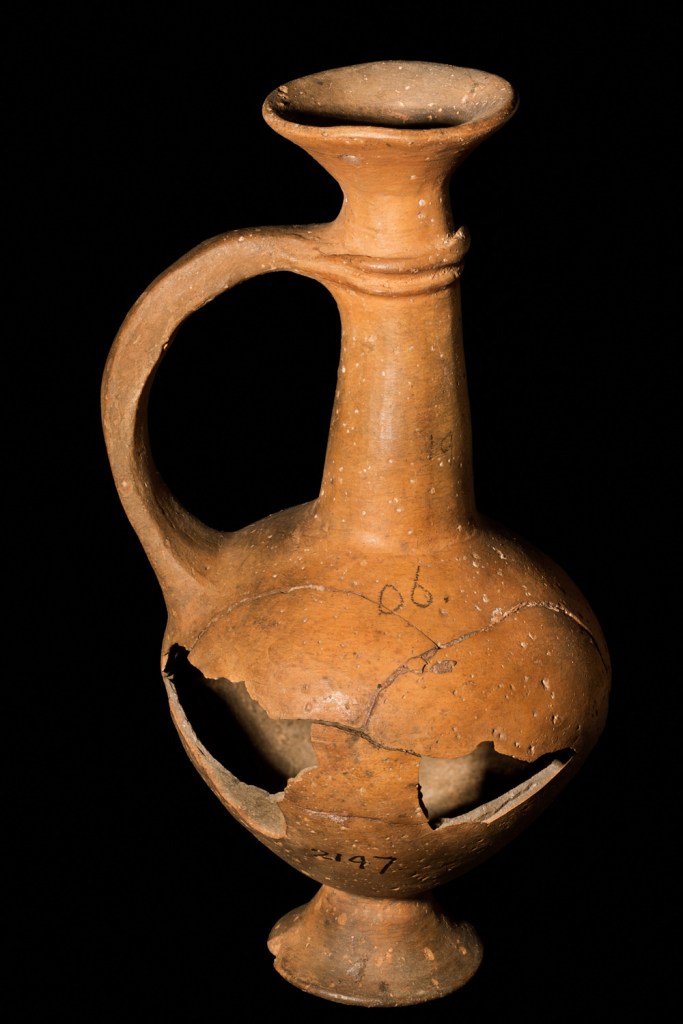
The piece of art I have created represents my and my family’s journey and the journey of the object I have chosen. I have used a poem that my mother wrote when she arrived in the UK along with an attempt to replicate the theme of the vase by using clay to bring out the realism of it and make it as realistic as the original piece. After the clay was set and hardened, I went ahead with breaking the vase into smaller fragments in order to represent the bigger picture. The bigger picture is that each broken fragment of that vase is like each broken piece of me left in each country I have migrated to. Similar to the journey of the object, in each country that the object had travelled from and to, it was as if it had left a memory or engraving and a little piece of history had been lost on the way.
Ahmed Farajallah
‘Nostalgia’ (by Ahmed’s mother)
She is my mother,
My blood and my flesh
Who denied us from seeing each other?
Do I blame the soldiers
Who narrowed my life
I left my identity behind
I went out looking for my life
I blamed fear, poverty and war
Or do I blame myself?
For changing my homeland for a safe place
Where we don’t hear shells, and no tanks roam
No curfew or crossings
No magnet cards, no bombs
No reconnaissance and surveillance planes.
No leaflets fall from the sky
No warnings for evictions, no alarms
No oppression, no humiliation
No destroying dignity, no insult
I live in a quiet neighbourhood
I go to work in the morning
Evening I go back home
In my quiet neighbourhood, I pray in the mosque
I sit with my children
I read with them, I shop for them
And at the end of the week, we go out together
We walk in the parks, we visit libraries and clean the garden
No bombing, no fear
No destruction, no demolition
I practice my peaceful job
In the peaceful city
I don’t do politics
I don’t speak about it
But I read what I want
I check online newspapers and subscribe to magazines
But I read about my homeland in the news titles
I watch its news on the screens
No matter what, I was always proud of my nationality
Even after leaving behind my old identity
Always busy from morning till bedtime
And before I fall asleep
My mom’s face looks at me
And I spend half nights turning, ruminating and thinking of her
Am I in my normal place?
Is this my home, my host, or my destiny?
Between summer and summer
I turn on the thorns
I think about my mom
I yearn for my brothers, for my first house
For my childhood, my old street, in the far away village
Despite the field being lost before I was born
But my old people told me about it,
My family and neighbours
My father and uncles talked about it
And I saw the tears running on the faces of the elderly women
So I learned about the stories they didn’t tell us
We were satisfied with the “ghouls” and “the seven girls walking on the beach.”
What the illiterate beautiful old ladies did not write
I read with the eyes of my heart
And what they did not say, I recorded in my memory
The great grieving patient ladies
Women of Peace and War
Heroines of all times
Do they forgive those they have given birth to?
Who chose to leave or die
Who underestimated the huge regret and deep pain
Regret is useless when it’s too late!
 Ancient History, Contemporary Belonging